
Shenzhen Is Way Ahead in Hardware
요약 · Summary
A ring on par with the $399 Oura costs $30–40 at the factory in Shenzhen, and a customized version comes back in one to two months. After a week and a half there, I kept coming back to one thought: in hardware, this city is far ahead.

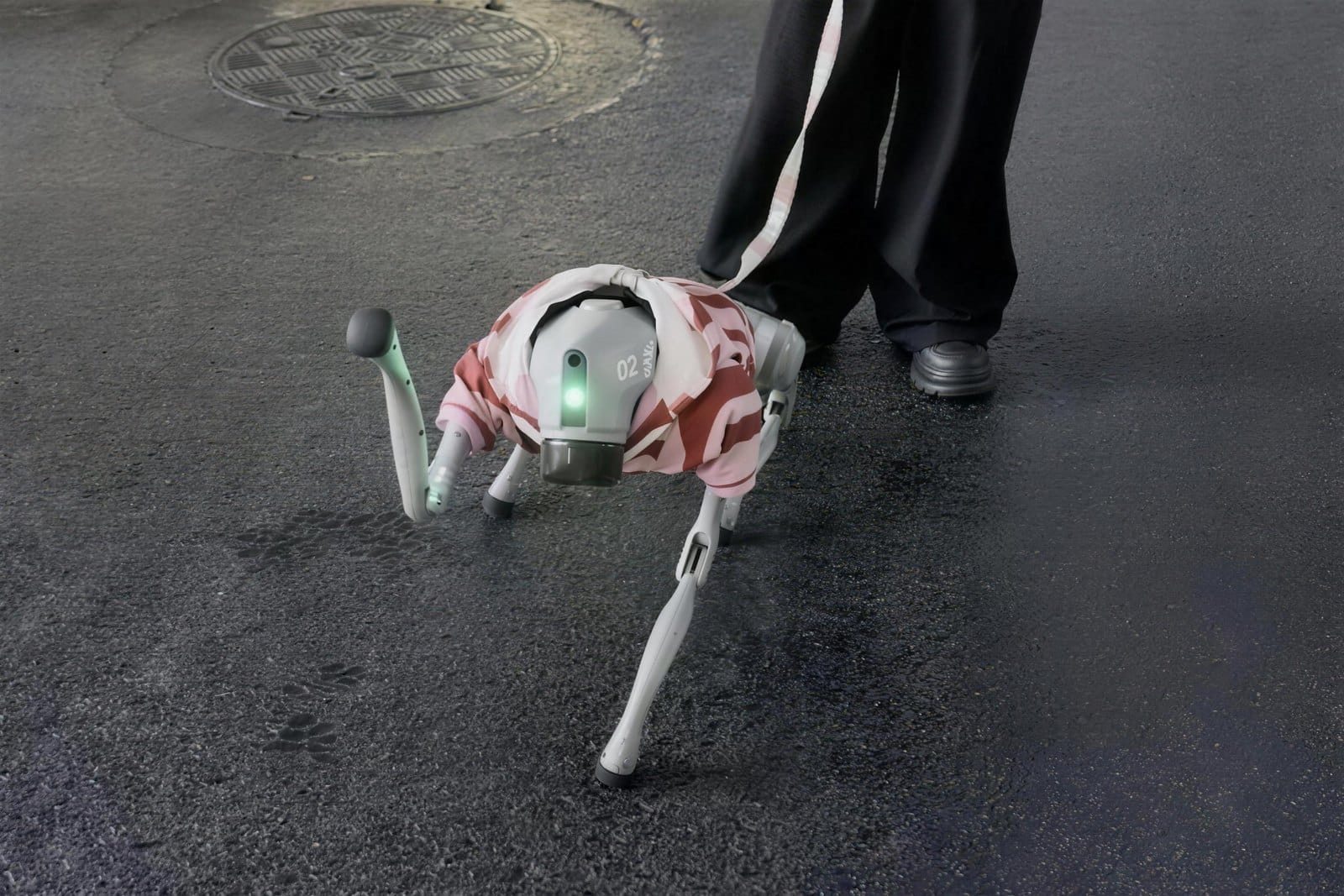
On Shenzhen's streets at night you pass people walking robot dogs, and during the day a cleaning robot weaves through pedestrians on the sidewalk by itself. Over the week and a half I spent there, the thought I kept having was that in hardware, this city is far ahead. Less because of any one company than because making things here just looks easy. The designers, the factories, the parts, even the prices are already in place. All it needs is someone who knows exactly what they want.
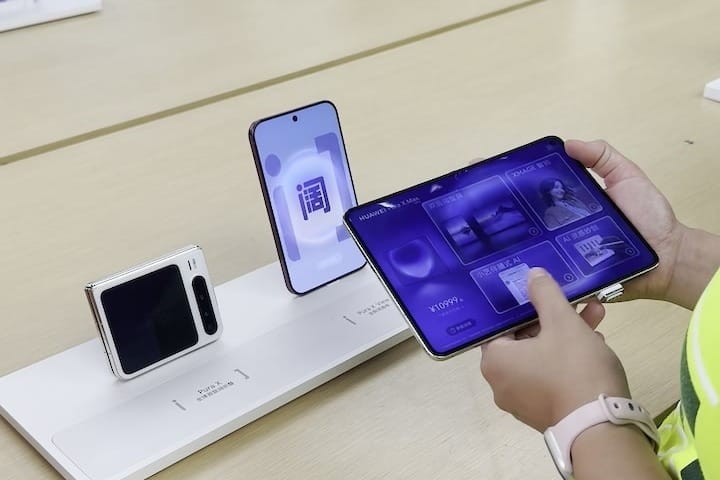
The place I felt that lead most was a Huawei store. Apple announced its first foldable, the iPhone Duo, in September at $1,999, and it only reached stores on October 23. At the Huawei store in Shenzhen, phones that open like a book were already on the tables, and right next to them was a phone whose screen folds into three panels. Huawei launched its first tri-fold in September 2024. People were also casually trying out a big tablet that folds in half.
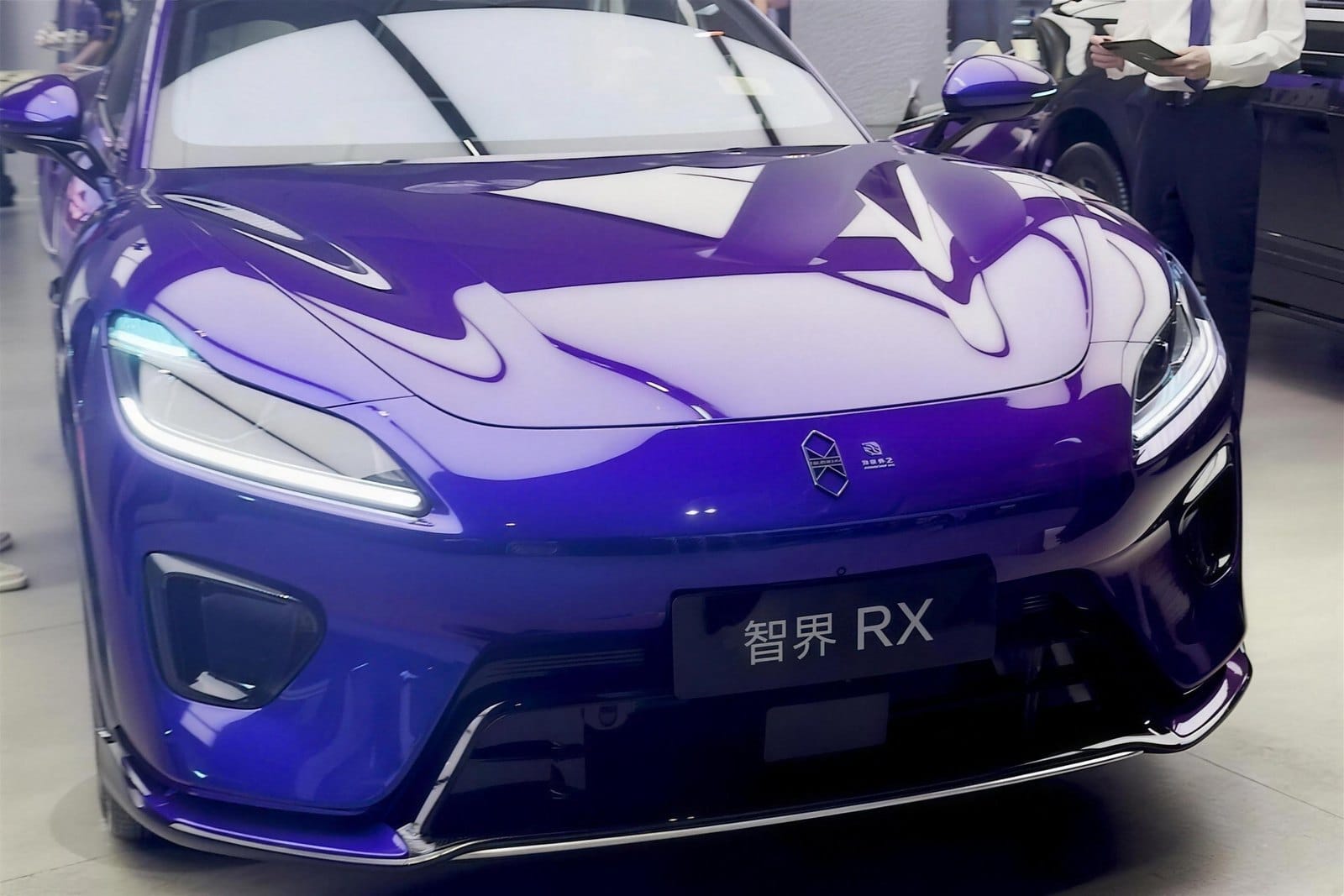
There was a car in the store, too. Huawei doesn't run the factory itself; it builds these cars with automakers and sells them in its own stores, with Huawei deep in the design, the software and the sales. Phones, tablets, laptops, cars: it makes almost every kind of electronics. And when US sanctions in 2019 cut off its Android support from Google, Huawei unveiled its own operating system, HarmonyOS, that August. There's now a version that doesn't run Android apps at all, and phones, watches and cars all run on the same system. In a way, the sanctions seem to have turned Huawei into a company that owns everything from the hardware to the operating system.
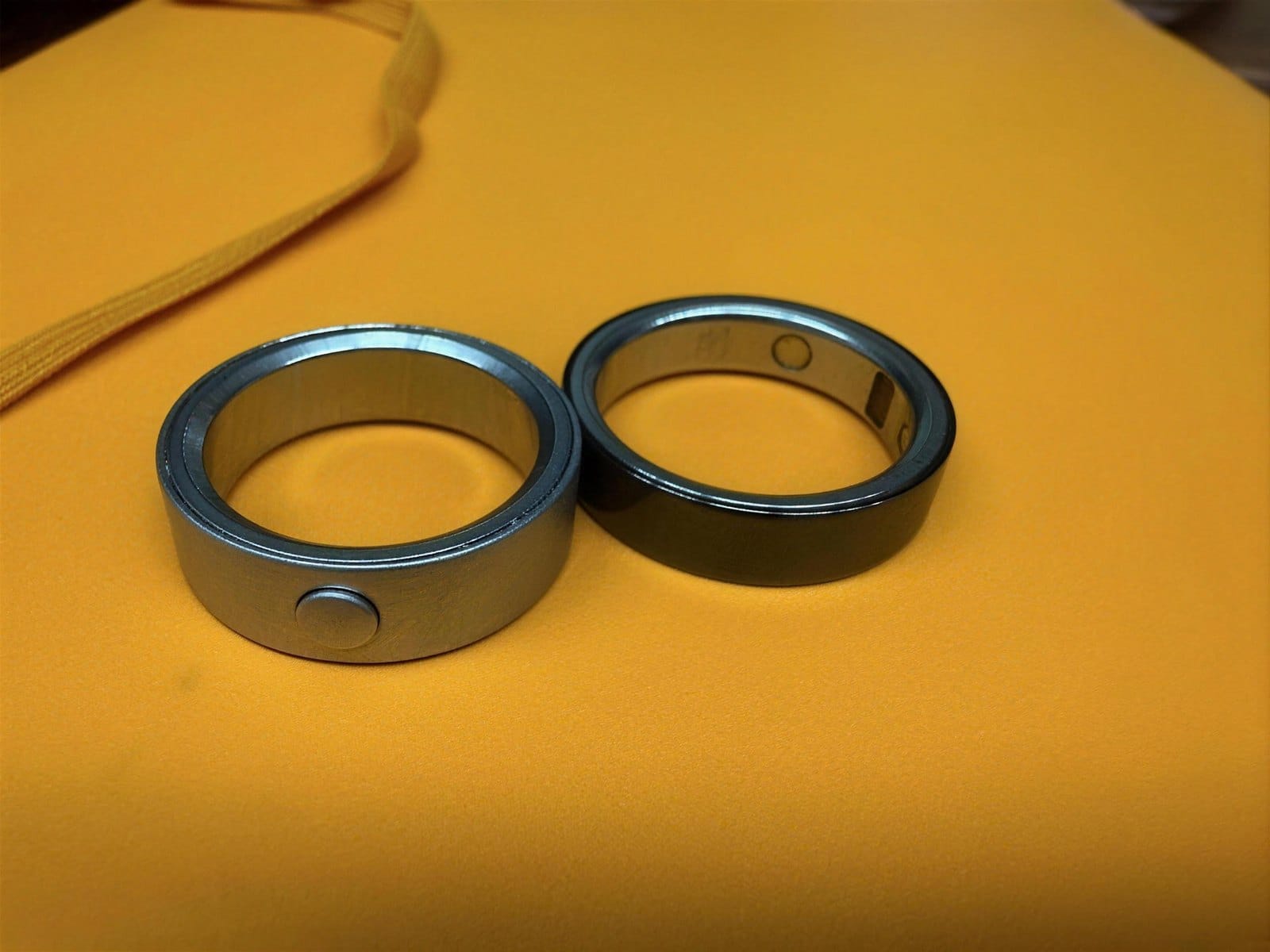
The first thing that hit me was price. I visited a smart ring maker with a friend, and there were already more Oura-style rings than I could count. Smart bands are made by so many factories that prices are basically settled, and the cheap ones are under $10. A ring at Oura's level costs $30–40 at the factory. Add a voice recorder and it's $80–90.
The latest Oura starts at $399 in the US, plus $5.99 a month for the membership. To be fair, the sensor accuracy, materials and algorithms aren't the same. Still, the ring itself already has a price tag in Shenzhen, and a settled price means a lot of factories have already made a lot of these. So I think a big share of what Americans pay Oura goes to software, data and brand rather than hardware.
What impressed me more was that the same OEM had already built its next-generation ring. It has a sensor you can scroll on, a microphone, and it's waterproof. It's all done, and they hand over an SDK with it. A brand only has to put its own app and service on top of that SDK. I'd assumed new features come from the brands first. Here the factory had built them already and was waiting for someone to take them.
What surprised me more was speed. There are so many people who can design hardware and so many factories that can build it that once you place an order, a customized product comes back in one to two months. I'd always thought of hardware as slow and expensive. That assumption doesn't really hold here. If you know specifically what you want, and it maps onto a form factor that already exists, getting it made is remarkably easy. In a way, Shenzhen has mostly answered the question "can this be built?" What's left is knowing exactly what to build and where to sell it.
The money works differently too. I met Moera, a company making something very close to Eight Sleep: a mattress topper that circulates water to cool or warm your bed. The team sits inside a robotics company. They design and build the product, and mass production runs on the robotics company's line. The founders and the robotics company share the equity.
In Silicon Valley, splitting equity with a factory from day one would look strange. But for production-heavy products, locking in a factory is the hardest part. Here the factory invests with a production line instead of cash, and in hardware that can be worth more than money. I came away thinking that securing manufacturing capacity matters more than holding on to every share.
It gets more interesting when you look at who that product competes with in the US. An Eight Sleep Pod 5 starts around $2,800, and a $199–399 annual subscription is required for the first year. Moera leads with no subscription fees. It debuted at IFA this year and is now taking $30 deposits in the US. Because Shenzhen can build it cheaply and quickly, it can go after, on price, the part American companies earn through subscriptions.
There's depth as well. BrainCo has been building brain-computer interfaces since 2015. It started out making prosthetic hands and legs for people with disabilities, and now it has a system that reads brain signals non-invasively, from outside the head, to steer drones and robots. In one research demo, a person wearing a sensor cap looks at a marker flickering at 9 Hz on a screen, and a humanoid robot reads that signal and raises its right hand to wave hello. In a demo video released in July, BrainCo packages this, steering robots and drones with brain signals, into a research platform it says anyone can start using in 10 minutes, no BCI background needed. That really struck me too. It felt like we're now heading toward an interface between the brain and hardware.
One of its flagship products is a robotic hand. It survives drops from real heights, it's packed with sensors, and the joints are designed in such detail that it moves much like a human hand. According to the company, its newest model has 21 degrees of freedom and tactile sensing across the whole palm.
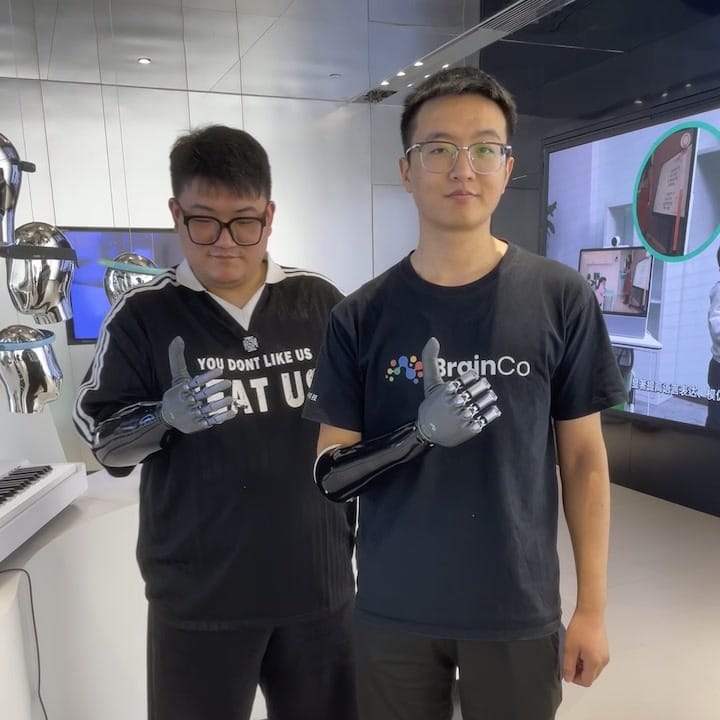
The showroom was also full of everyday devices built on the same technology: headbands the company says help children with autism or attention problems, and a sleep device meant to measure and improve sleep quality. The benefits are the company's claims and deserve a closer look, but it struck me that they're already selling brain-signal technology split across this many products.
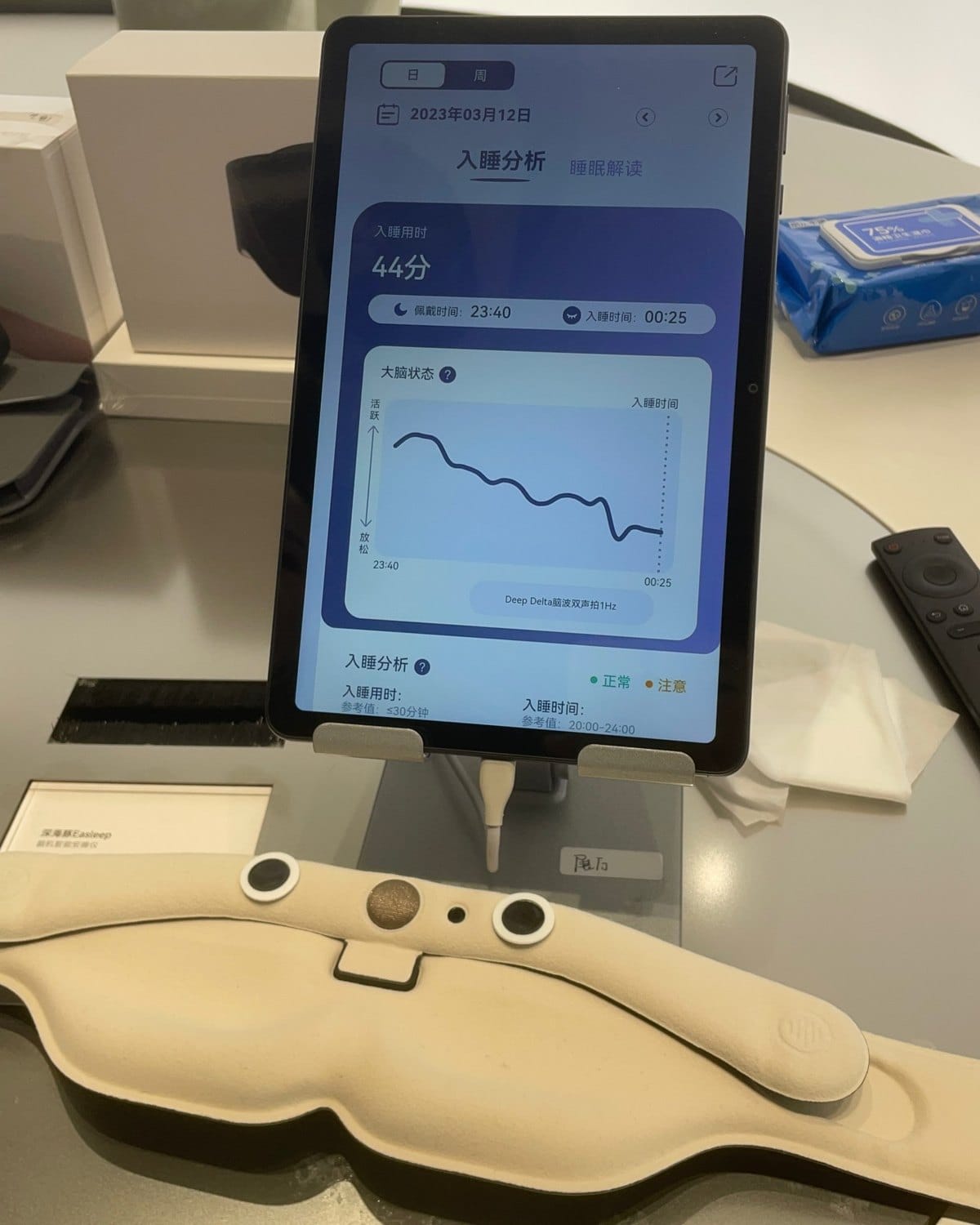
That's ten years of prosthetics know-how turning into robot hands. If robots are going to do human work, they need hands, and the companies already making those hands are here. The factory numbers say something similar: according to the International Federation of Robotics, 59% of the industrial robots installed worldwide last year, 354,000 units, went into China.
Even the reason I went to Shenzhen ended up being about robots. Winnie Qiu, whom I met in San Francisco, offered to introduce me to an eye researcher if I came to Shenzhen. Winnie is the founder of Avinasi Labs, a data-layer company that connects data for AI drug discovery. The professor turned out not to study the eye itself but robotic eye surgery. The eye keeps moving during surgery, and so do the surgeon's hands, so when a drug has to go into the tiny blood vessels inside the eye, a robot's hand is more precise than a human's. I went to hear about eyes and came back with a story about robots. In Shenzhen, solving a medical problem with hardware seemed like the natural thing to do.
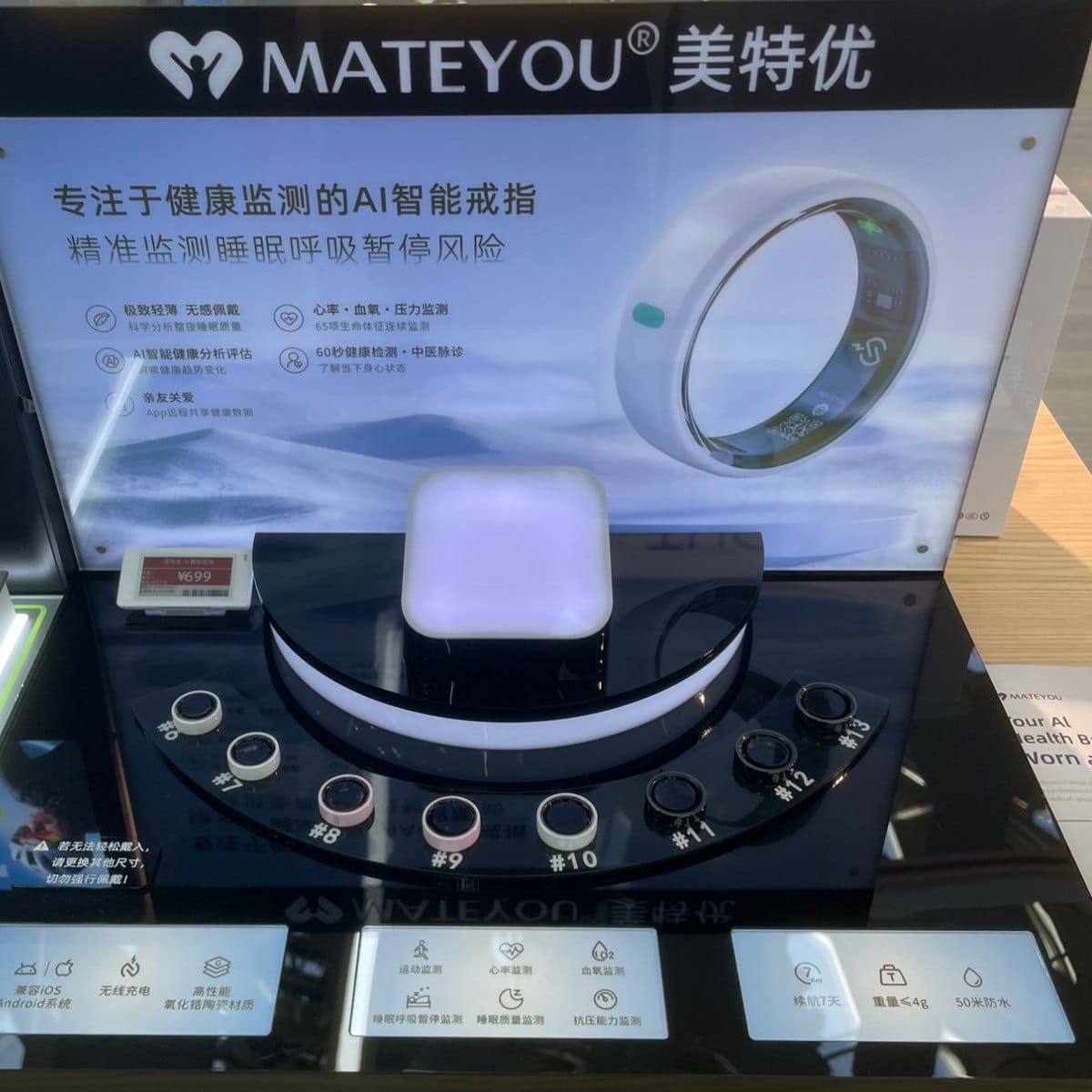
On the day I left, the duty-free shop at Shenzhen's airport was full of hardware too. Smart rings alone had a separate display for each brand. A MATEYOU ring advertised as catching sleep apnea risk was about $105, and the RingConn Gen 3, pitched on blood-vessel health, was about $389–419. Next to them were Rokid glasses that put a camera, earphones and an AI assistant into one pair of frames for about $494, and an iFLYTEK dual-screen translator labeled "the translator that helps you do business" for about $973. A karaoke speaker with its own screen and two wireless mics was about $404. With smart rings alone, I'd seen the whole chain inside one city, from the factory price to the price on the shelf.
The question I kept turning over was how to use this ecosystem to get into the US. Moera is already on that path: built on a Shenzhen production line, sold in the US. The makers, the factories and the prices are all already here. So in hardware, I think the winners will be the people who know exactly what they want and can sell it in a market like the US. I don't have an answer yet. But I'll be holding on to this question for a while.
Sources
- Oura Membership pricing (Oura support) · Oura Ring 5 pricing (Lifestack, 2026)
- Understanding the Eight Sleep Membership (Autopilot required) · Pod 5 pricing (review, July 2026)
- Reuters: Apple's foldable iPhone hits stores (iPhone Duo, 2026-10-23) · CNET: Huawei Mate XT, the first tri-fold (2024-09-10)
- Harmony Intelligent Mobility Alliance (Wikipedia): Huawei does not directly manufacture cars · Reuters: Huawei's Harmony aims to end China's reliance on Windows, Android (2024-06-27)
- Moera
- Shenzhen airport duty-free prices: converted from the yuan price tags at $1 = 6.68 yuan (October 2026)
- BrainCo products · BrainCo demo: Brain-Controlled Robot AI Platform (YouTube, 2026-07-16) · Starkids autism training system (BrainCo)
- IFR World Robotics 2026: Five Million Robots now Operate in Factories Globally
- Avinasi Labs
- In-Human Robot-Assisted Retinal Vein Cannulation, A World First (Ann Biomed Eng, 2018)
새 글을 메일로 받아보세요
한국어, 영어 중 받을 언어를 고르세요. 언제든 해지할 수 있습니다.